
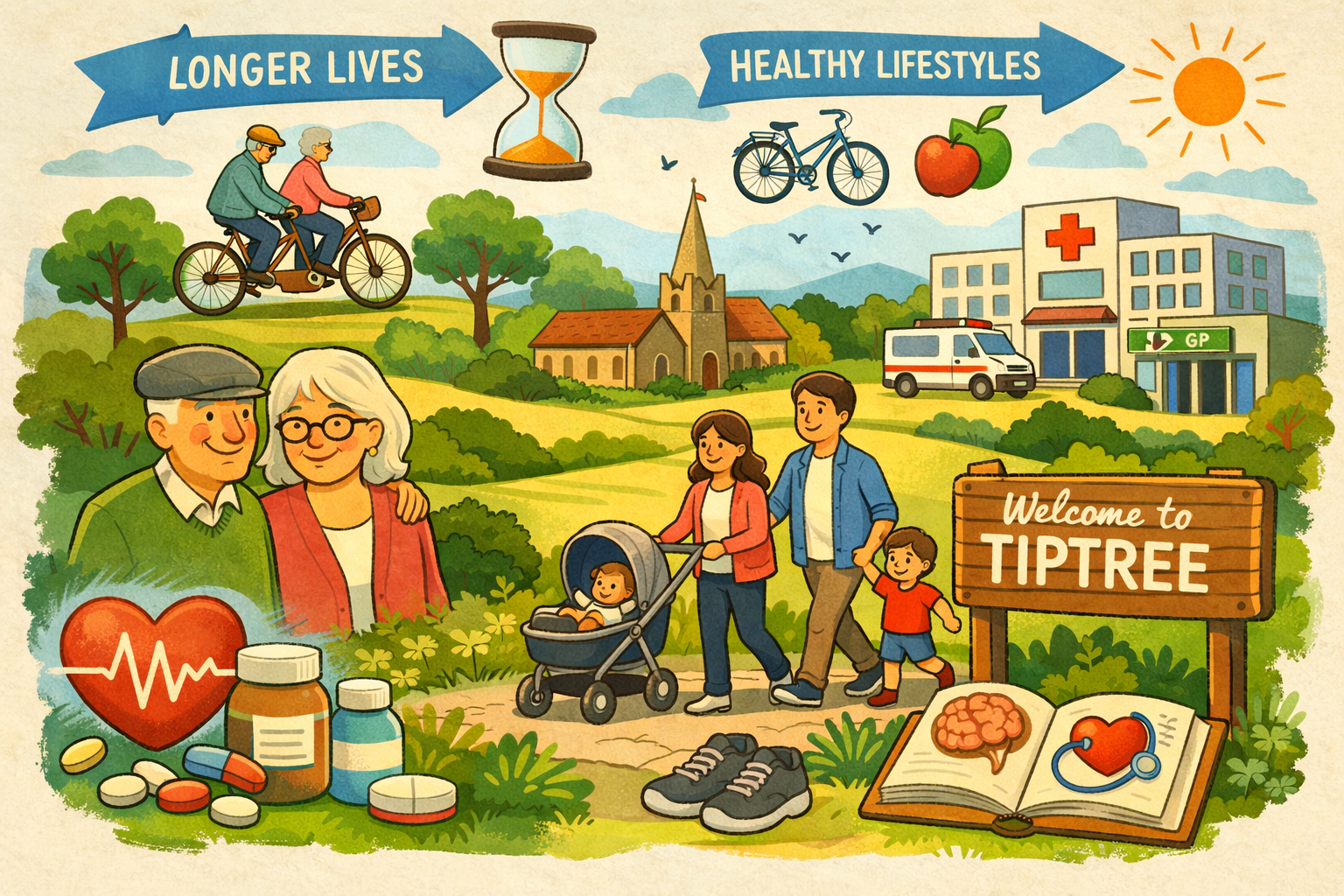
Residents in Tiptree are part of a wider trend seen across Colchester and the rest of the country – people are living longer than ever before.
Figures from the Office for National Statistics show that life expectancy in England has risen significantly over the past century. As a result, the types of health conditions affecting communities today are very different from those faced by previous generations.
A changing health picture
In the past, infectious diseases were among the leading causes of death in the UK. Today, longer lifespans mean that age-related conditions are much more common.
Across England, the most frequently recorded causes of death include dementia, heart disease and certain cancers. Health experts say this reflects an ageing population rather than a sudden rise in illness.
For communities like Tiptree, which has a mix of families and older residents, this shift highlights how healthcare and support services continue to evolve.
Living longer – and healthier
Public health data suggests that people in many parts of Essex benefit from lifestyles associated with longer life expectancy, including access to green spaces, community activities and local healthcare services.
While no two towns are exactly alike, villages such as Tiptree often have demographics that include a larger proportion of older residents compared with city centres. This can influence the types of health conditions seen locally.
Why these statistics matter
Understanding health trends can help local authorities and healthcare providers plan services more effectively – from GP access and hospital care to support for older residents.
Organisations such as the Office for Health Improvement and Disparities regularly publish local health profiles that help councils and communities identify priorities for the future.
A community focus
For residents, these figures are less about statistics and more about understanding how communities change over time.
As people live longer, towns like Tiptree continue to adapt – with growing emphasis on healthy lifestyles, community support and services that help residents remain active and connected throughout later life.



Leave a Reply